

How to play

Simple to learn.
Never mastered.

Dinn pairs simple rules with bluffing: a game that takes a few minutes to learn but can never be mastered. Pick how you’d like to start.

Dinn in two minutes

Shatter all three of their hearts.

Every round is three reveals and a battle. You and your opponent play at the same time, card by card.

  1. 1

    Reveal a Hero

    You and your opponent each put a Hero face down, then flip them together. The higher base power resolves its ability first.

  2. 2

    Modify its power

    Two more reveals, a Support card each, chosen after seeing what just flipped. Equipment adds its power to your Hero. Or pass.

  3. 3

    Battle

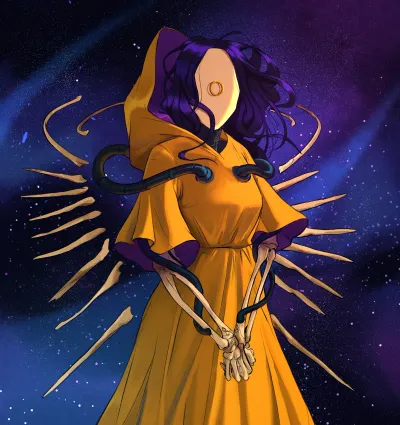
    Higher total power wins. The loser shatters hearts equal to their Hero’s heart value: The King in Yellow’s is 2.

Then the round’s cards go to the graveyard, both players draw two, and the next round begins. Run out of hearts, or have no Hero to play, and you lose.

Chapter 1

The cards

Three types of card. Pick one to see its parts.
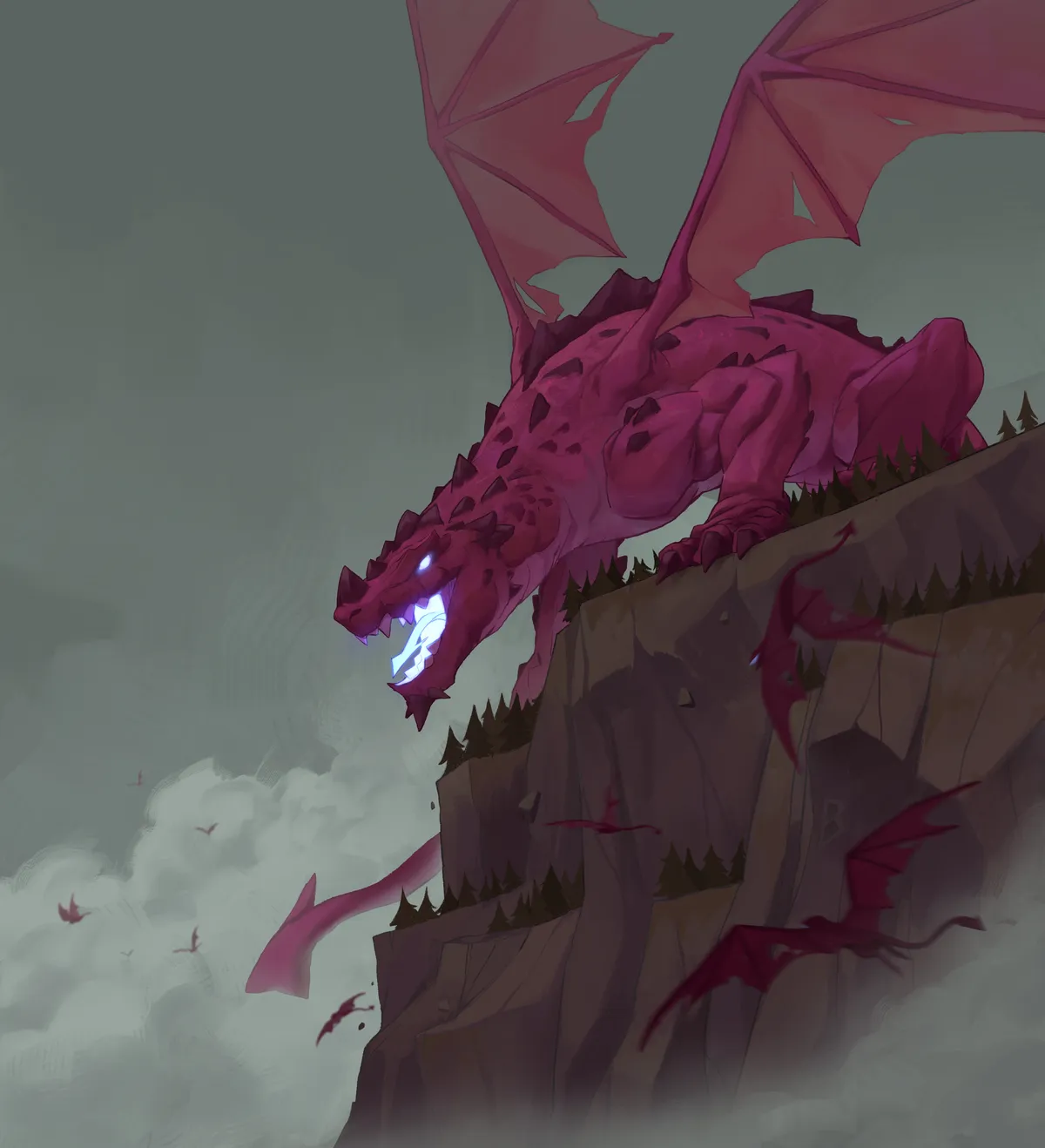
Your champion for the round. Its power fights, and its heart value is what you lose if it loses.

  1. 1ArtPainted by hand; the illustrator is credited at the foot of the card.
  2. 2Base powerHow strong the Hero is before any ability changes it.
  3. 3AttributeOne of six. The Support cards you reveal this round must share it.
  4. 4NameA deck can’t hold two cards with the same name.
  5. 5TypeHero, Equipment or Action.
  6. 6Heart valueHow many of your hearts shatter if this Hero is defeated (1 to 3 to start).
  7. 7AbilityWhat it does, and when: “On reveal”, “While in play”, “If defeated”…
  8. 8Set and versionIts set’s code (SD002 for the starter decks, EX01–EX06 for the expansions) and the card’s version.

Attributes

Your Hero decides what you can play for the rest of the round: any Support card you reveal must share an attribute with your Hero.

Support cards

Equipment and Actions together are called Support cards.
Chapter 2

Hearts and winning

How you keep score, and the two ways to lose.

You start the game with 3 in-play hearts. When you shatter hearts, turn that many of your heart cards face down: they’re no longer in play. Hearts are cards, but they have no abilities of their own (other cards may refer to them).

You lose if…

You have no in-play hearts left, or you can’t play a Hero in the First Reveal.
Chapter 3

Setting up

Your side of the table, and your opening hand.

face-down heroHero deck
face-down cardSupport deck
1 · Hero
2 · Support
3 · Support

Reveal zones

Graveyard
Hearts
PartWhat it is
Hero deckAll your Heroes, shuffled, face down.
Support deckAll your Equipment and Actions, shuffled, face down.
Reveal zonesThree spaces, one per reveal: the Hero in the first, Support cards in the second and third. A card is only in play while it’s face up in one of these.
GraveyardDiscarded and destroyed cards, face up. Either player may look through it any time. Its order doesn’t matter.
HeartsYour three heart cards, face up.

Opening hand

Draw 3 cards from your Hero deck and 5 from your Support deck. No mulligans.
Chapter 4

A round

Six phases. Both players do each one at the same time.

  1. 1

    Draw

    Skip it in the first round. Otherwise draw two cards in any mix of your two decks. Say the mix first: you can’t draw one, look, then choose the deck for the second. With fewer than two cards left between both decks, draw what you can.

  2. 2

    First Reveal

    Resolve start-of-reveal abilities. Place a Hero face down in the first reveal zone; when both players are ready, flip them together. The Hero with the higher base power resolves its ability first. Then resolve end-of-reveal abilities. If you can’t play a Hero, you lose the game.

  3. 3

    Second Reveal

    Resolve start-of-reveal abilities. Place a Support card face down in the second reveal zone and reveal together. If it’s Equipment, add its base power to your Hero; then the player whose Hero has the higher total power resolves their card first. Then resolve end-of-reveal abilities.

  4. 4

    Third Reveal

    The same as the Second Reveal, in the third reveal zone.

  5. 5

    Battle

    Total power is the Hero’s base power, plus your Equipment’s base power, plus what abilities add. Higher is victorious, lower is defeated: shatter hearts equal to the defeated Hero’s heart value. Equal power: nobody shatters, and neither Hero is victorious or defeated. Then resolve “victorious” and “defeated” abilities.

  6. 6

    Cleanup

    Resolve end-of-round abilities. Send all in-play cards to the graveyard (anything an ability changed is back to normal once it leaves play). Over eight cards in hand? Discard down to eight, your choice.

Abilities that happen “at the beginning of the round” happen before the Draw. “Start of each reveal” and “end of each reveal” abilities resolve at the start and end of every reveal.

Breaking ties

When two Heroes tie for who resolves first, the higher heart value goes first; then it’s random (a coin flip).

Passing a reveal

In the Second or Third Reveal you may pass instead of placing a card. If you do, your opponent may take back their face-down card and place a different one, or pass too.
Chapter 5

Building a deck

Exactly 36 cards, split between two decks.

Hero deck

12
  • 3 Heroes with a heart value of 3
  • 4 with a heart value of 2
  • 5 with a heart value of 1

Support deck

24
  • 12 Equipment
  • 12 Actions
  • No two cards with the same name.
  • Heart cards don’t count toward either deck.
  • Swap a card in by taking out another of the same type (and, for a Hero, the same heart value).
Chapter 6

Keywords

Words that mean something specific on a card.

KeywordMeaning
BanishRemove a card from the game, face up. Banished cards aren’t put in a graveyard and can’t be interacted with unless an ability says so.
DestroySend an in-play card to its owner’s graveyard.
HealFlip one of your face-down (shattered) hearts face up: it’s in play again.
ImmuneAn in-play card can’t be affected by certain abilities. “Immune to your opponent’s abilities” means no ability on your opponent’s cards can affect it.
NegateTreat an in-play card as if it has no ability text. Only the ability: not base power, heart value or attributes.
ShatterFlip one of your hearts face down: it’s no longer in play.
TerminateGo straight to Cleanup; in-play cards go to the graveyard as usual. There’s no battle, so no hearts shatter for one. The next round starts normally.
Chapter 7

Advanced rules

For when abilities pile up.

PrecedenceAbilities from cards in the same reveal zone that would resolve at once go in precedence order: the same order as who goes first. Before the first reveal and during Cleanup, use the last precedence. Across several zones, start with the leftmost and work right, settling precedence in each.
Searching a deckIf an ability has you search a deck, shuffle it when you’re done.
Sharing informationIf an ability depends on something your opponent can’t know, show it. A Hero whose power counts the Equipment in your hand means showing your hand.
Specific beats generalWhen an ability changes a rule, the ability wins.
Whose zoneA card sent to a graveyard or banished always goes to its owner’s, whoever’s ability sent it.
Whose hearts“Shatter” means your own hearts. When it’s your opponent’s, the card says “your opponent shatters…”.
Quick reference

Keep this by the table

Start3 Heroes + 5 Supports. 3 hearts. No mulligans.
Each roundDraw 2 (any mix) → reveal a Hero → reveal a Support → reveal a Support → battle → cleanup.
Who goes firstFirst Reveal: higher base power. Second and third: higher total power. Ties: higher heart value, then a coin flip.
BattleHigher total power wins. The loser shatters their Hero’s heart value. A tie shatters nothing.
Hand limit8, at Cleanup.
Decks12 Heroes (3·4·5 by heart value 3·2·1) + 12 Equipment + 12 Actions. One of each name.

Questions

Is Dinn free?

Yes. Play in your browser or on iPhone for free, against the bot, against friends and in competitive. You start with the Sentient deck and win more in the tournament. Expansions open from packs you earn by playing, or you can unlock them.

Do I need an account?

Not to start. Play as a guest straight away. Sign in with Apple or Google when you want your decks, rank and collection on every device.

Can I take a mulligan?

No. Your opening hand is the hand you play.

Does Dinn use AI-generated art?

No. A professional artist illustrates every card, and each card names its illustrator.

Is Dinn for kids?

Dinn is made for 13 and up. Its art draws on myth, history and science, and some of it shows battle and violence.

Who makes Dinn?

Bison Bluff Games, a small independent studio in Cheyenne, Wyoming, founded in 2020. The team: Gabriel Whittemore, Jonathan Roig and Kyle Schumacher.

Is there a printed version?

Yes. Every starter deck and expansion can be printed to order and shipped to you, and its cards unlock in the app the moment you pay.

From the Dinn rulebook (October 2025).